
Pomodoro Isn’t Working? The Missing Step: Reflecting on Your Study Sessions
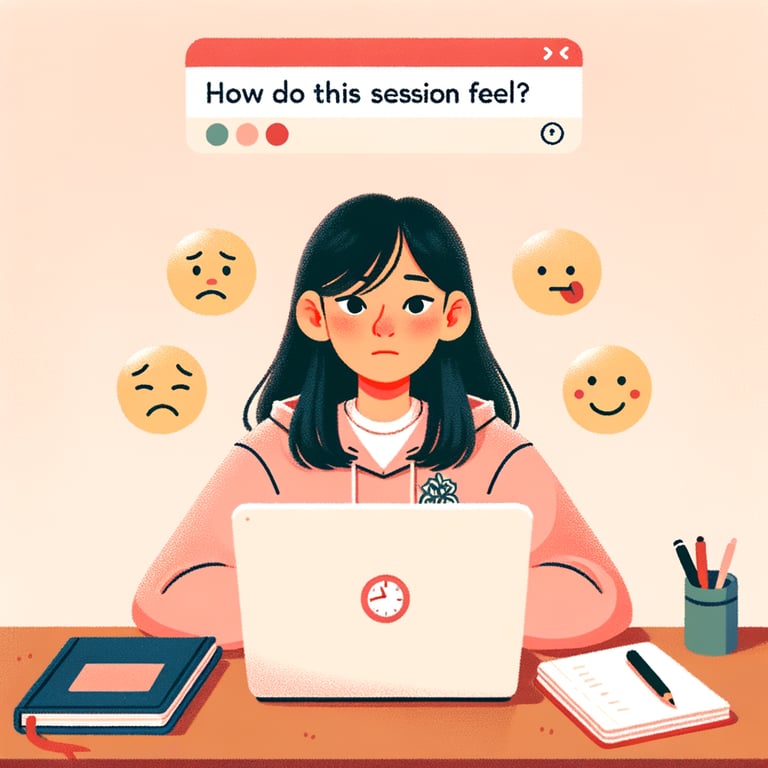 You sit down to study for an exam, open your notes, set a 25‑minute Pomodoro timer, and think:
“Okay, this time I’ll actually focus.”
The timer goes off… and you’re not sure if anything really went in.
You did the time, but your brain feels foggy. You might even Google things like:
“Why can’t I focus when studying?”
“Pomodoro doesn’t work for me”
“How to actually concentrate for exams”
Most study tips stop when the timer stops.
From learning science, that’s where a crucial step is missing.
The real improvement in your focus and concentration often happens in the 1–2 minutes after your study session—if you take a moment to reflect.
Why Using a Study Timer Alone Often Stops Working
Study timers like Pomodoro are popular because they:
Make starting less scary (“It’s just 25 minutes.”)
Help break big exam revision into smaller chunks
Give you a clear end point for a study block
But if your routine is:
Start timer
Half-study, half-scroll
Timer rings
Start another timer
…you end up with:
Lots of time at the desk, but not much real learning
Repeating the same unhelpful habits every day
The belief that “I’m just bad at focusing” or “I’m lazy”
From cognitive science, we know that:
People improve fastest when they combine practice (study sessions) with feedback (reflection on how it went).
You don’t need a teacher or exam for this feedback.
You can build your own feedback loop into every study block.
The Study Cycle Isn’t Finished When the Timer Ends
A “complete” study cycle looks like this:
Plan what you’re going to study
Schedule when you’re going to do it
Focus during a realistic, timed study session
Reflect briefly right after
Adjust your next session based on what you noticed
Most students only ever do steps 1–3.
Students who steadily get better at focusing live in steps 4 and 5.
Reflection is the step that turns:
“I studied 3 hours”
into“I know when and how I study best.”
What “Reflecting on Your Study Session” Actually Means
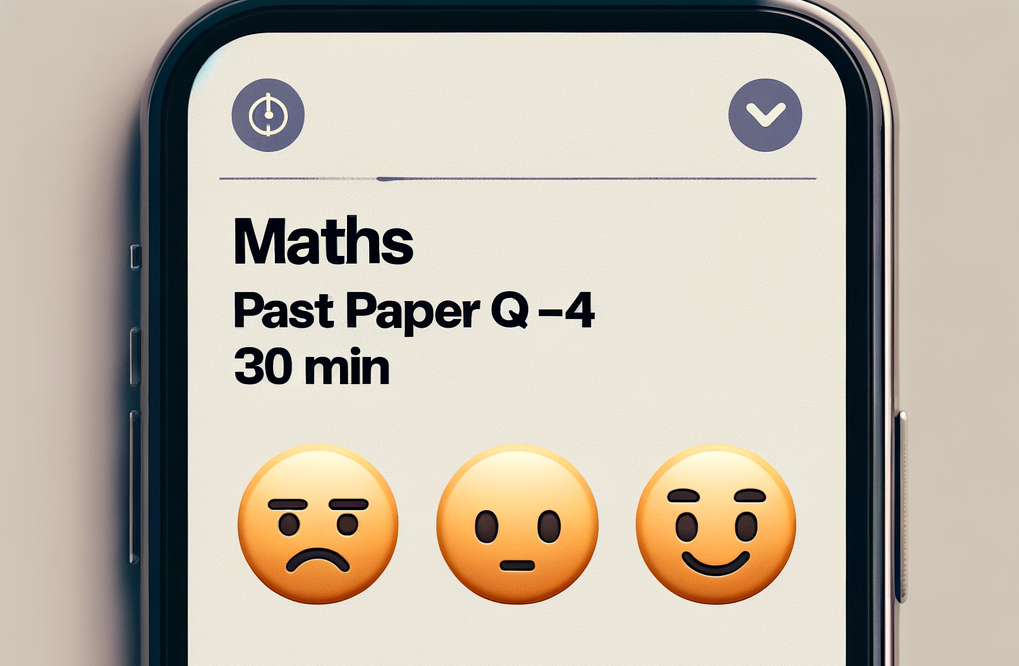 Reflection doesn’t mean writing a page in a diary or doing a deep life review.
For students, reflection is simply asking:
How focused was I?
How did I feel during that study session?
What helped or hurt my concentration?
Even a 10–20 second gut check like:
“That was frustrating and scattered.”
“That felt calm and focused.”
“I was mentally somewhere else the whole time.”
…can give you data to improve your next study session.
Quick example: Katie (GCSE student)
Katie revises for GCSE maths after dinner because “that’s the only free time I have.”
Most nights, it feels like:
Low energy
Constantly checking her phone
Rereading notes without much going in (“fake studying”)
Without reflection, she just concludes: “I’m bad at maths” or “I have no self-discipline.”
With a simple reflection—“tired, distracted again, after dinner”—she notices a pattern:
After-dinner = low energy, low focus
Phone on the desk = instant distraction
Small changes:
Move one or two maths sessions to right after school
Put her phone in another room for that block
Same person, same subject.
Better system, thanks to reflection.
A 3-Question Reflection You Can Use After Every Study Timer
Right after your study timer goes off (before you stand up), ask:
How focused was I?
Very focused / Somewhat focused / Mostly distracted
How did I feel?
Calm and okay / Neutral / Frustrated or anxious
Why? (best guess)
One short sentence: “Because ______.”
Examples:
“Somewhat focused, neutral. Because I was tired and the task was too vague (‘revise chemistry’).”
“Very focused, calm. Because I knew exactly what to do (finish Q3–5) and my phone was in another room.”
“Mostly distracted, frustrated. Because I kept checking messages and the questions felt too hard.”
If you don’t want to write, you can use a super‑fast version:
Pick 1 emoji in your head:
😖 Frustrated
😐 Meh / okay
🙂 Satisfied
Then think: “Why that emoji?” for 5 seconds.
This tiny habit is already improving your study self-awareness, which is strongly linked to better learning and exam performance.
Spotting Your Personal Patterns Over a Week
Reflection is powerful when you zoom out and look at patterns, not single sessions.
After a few days of short reflections, ask yourself:
When do I focus best when studying?
Morning, after school, late evening?
Which tasks give me the best concentration?
Problem sets, flashcards, reading, past papers?
What usually ruins my focus?
Phone, noise, hunger, vague tasks, stress from other subjects?
Now your revision plan is based on your own data, not generic advice.
Example: Leo (first-year university student)
Leo revises for his first-year exams and logs a quick reflection after most study sessions.
After a week, he notices:
8–10 pm sessions = often 😖 (frustrated, tired)
3–5 pm sessions = often 🙂 (satisfied, focused)
Open-ended tasks like “work on essay” = mostly 😐 or 😖
Very specific tasks like “draft section 2: intro + 2 arguments” = more 🙂
His adjustments:
Shift heavy thinking (essay writing, proofs) to mid-afternoon where possible
Use evenings for lighter work (review notes, flashcards)
Turn vague to-dos into concrete next steps
Leo didn’t magically become more disciplined.
He just used reflection to learn his best conditions for focus.
Turning Reflection Into Real Focus Improvements
Put it back into the full cycle:
Plan
List your tasks (e.g., “Review chemistry equilibrium,” “Do 2 past paper questions”).
Schedule
Decide when you’ll do them, so they have a real place in your week.
Focus
Use a timer and work on one clear, specific task.
Reflect
Emoji / short note / quick rating on focus + mood.
Adjust
Change one small thing next time:
Time of day
Length of your study block
How specific the task is
Environment (noise, phone, location)
Over a month, you’re basically running experiments on:
“How to focus better while studying”
“What kind of sessions help me remember more for exams”
“What makes me procrastinate less”
It’s not about becoming a “perfect student.”
It’s about upgrading your system a little bit every week.
Making Reflection Easy Enough That You’ll Actually Do It
If reflection feels like homework, you’ll skip it. Let’s keep it ultra-light.
Option 1: The 3-Dot Method (Paper or Notes App)
After each study session, jot three quick notes:
F (Focus) – 0 = barely, 1 = okay, 2 = strong
M (Mood) – 0 = stressed, 1 = neutral, 2 = calm/satisfied
R (Reason) – 1–3 words: “phone,” “tired,” “clear goal,” “too hard,” “quiet library.”
Example:
“Maths Q1–5, 30 min. F2 M2 R: quiet, clear task.”
“History reading, 25 min. F0 M1 R: phone, vague.”
15–20 seconds, max.
Option 2: Voice Note Reflection
If you hate writing:
Open your voice recorder
After each timer, record 10–20 seconds:
“30-min physics. Focused for 15 min, then drifted. Probably because I was hungry. Next time I’ll eat first and start with easier questions.”
This still trains your brain to think in cause-and-effect about your focus.
Option 3: Emoji + One Sentence (The Ultra-Minimal Habit)
After every session:
Choose 😖 / 😐 / 🙂
Complete: “Because ______.”
Example:
🙂 “Because I studied earlier in the day and had a specific goal.”
😐 “Because I was a bit tired but could still get through flashcards.”
😖 “Because I left this too late and rushed.”
This is simple enough that even in exam season, you can keep doing it.
Reflection Is Not About Beating Yourself Up
If you notice thoughts like:
“I wasted that study session.”
“Everyone else is more productive than me.”
“I’ll never fix my procrastination.”
Try gently switching to:
“What got in the way this time?”
“What small change would make this 5% easier next time?”
Reflection is there to help you adjust your strategy, not to attack your character.
Think of yourself as a scientist testing how you study best.
From a learning science point of view, this is called a feedback loop:
You act → you get information → you adjust → you act again, slightly better.
How a Smart Study App Can Help You Build This Habit
You can do all of this with a notebook or notes app.
But many students struggle with:
Remembering to reflect at all
Keeping their reflections in one place
Actually seeing clear patterns over time
This is where a good study planner app can quietly support you.
Imagine:
After each focus session, the app prompts you to quickly rate how it felt (for example, with an emoji: frustrated, neutral, satisfied).
It stores your feedback automatically.
At the end of the week, it shows:
Your best focus times
Which subjects or tasks most often led to 😖 vs 🙂
Clear, friendly coaching-style notes like:
“Most of your evening sessions were 😖 this week. You might keep evenings for light review and move harder tasks earlier.”
“You were 🙂 most often when tasks were very specific. Try breaking big items into smaller chunks more often.”
That’s the idea behind AriaPlanner, an AI-powered study coach that helps you:
Plan your tasks and study plans clearly
Schedule realistic sessions into your actual calendar
Focus with an adaptive timer for each chosen task
Reflect through quick emoji feedback after each session
Review your week in the Insights tab, where “Aria’s Coaching Notes” highlight your productivity patterns and suggest gentle adjustments
Instead of guessing how to study, you get a guided feedback loop:
plan → schedule → focus → reflect → adjust.
Try This This Week: 5 Study Sessions With Reflection
For the next 7 days, run this small experiment:
1. Pick 5 study sessions
Choose any five sessions this week (25–50 minutes each), for any subject.
2. Before each session
Write down:
Task: What exactly will you work on?
e.g., “Do Q1–4 from past paper,” “summarize pages 10–18,” “memorize 15 vocab words.”
Finish line: How will you know you’re done for this block?
3. After the timer ends (1 minute)
Answer:
Emoji: 😖 / 😐 / 🙂
Focus: very / half / mostly distracted
One sentence: “Because ______.”
Log it in:
A notebook
A notes app
Or a planning tool like AriaPlanner that prompts quick emoji feedback after each focus session
4. At the end of the week (10–15 minutes)
Look back at your 5 reflections and ask:
When did I focus best?
When did I struggle most?
What 1–2 small changes will I test next week?
Examples of changes:
Move harder tasks to earlier in the day
Shorten sessions from 50 to 30 minutes
Break vague tasks into smaller steps
Keep your phone in another room for at least one block a day
If you keep pairing timers with tiny reflections, your focus doesn’t just depend on willpower.
You’ll steadily discover how you study best—and that’s one of the most valuable skills you can take into any exam, course, or career.
FAQ: Focus, Pomodoro, and Reflecting on Your Study Sessions
1. Why doesn’t the Pomodoro Technique work for me?
For many students, the Pomodoro Technique (25 minutes study, 5 minutes break) only solves the “when to start”problem. It doesn’t:
Fix vague tasks like “revise biology”
Address being tired, stressed, or hungry
Remove distractions like your phone or noisy environment
If you set a timer but feel unfocused, you’re not broken—the system is just incomplete.
Adding reflection after each session helps you notice patterns (e.g., “I always lose focus at night” or “I get stuck when the task is too big”) so you can adjust your plan instead of blaming yourself.
2. How can I improve my focus while studying?
Three simple things usually help the most:
Make the task smaller and clearer
Instead of “study chemistry,” use “do Q1–4 on equilibrium.”
Use a realistic timer
25–40 minutes of focused work, then a short break.
Reflect for 1 minute afterwards
Emoji: 😖 / 😐 / 🙂
One sentence: “Because ______.”
Over time, this shows you when, where, and how you focus best, so you can plan your study around your real concentration patterns.
3. How long should I study without a break?
For most students:
25–30 minutes works well for dense or difficult material
40–50 minutes can work for reading or problem practice if you’re reasonably fresh
What matters more than a perfect number is:
You actually focus during the block
You take a short break (3–10 minutes) before starting again
You reflect briefly at the end to see if that length felt too long, too short, or about right
If you constantly feel fried at minute 20, shorten your blocks. Reflection helps you find your personal sweet spot.
4. Is the Pomodoro Technique good for exam revision?
Yes, Pomodoro-style blocks can be great for exam revision if you use them well:
Use each block for a specific task (e.g., “finish one past paper section,” “review one chapter of notes”).
Mix in active techniques (past papers, flashcards, teaching the material) rather than just rereading.
After each block, rate how it felt (e.g., 😖 / 😐 / 🙂 and one reason).
Over a few days, you’ll see which times of day and which types of tasks give you the most effective revision. That’s much more powerful than just doing “3 hours of Pomodoro” with no feedback.
5. How do I stop fake studying and actually learn?
“Fake studying” is when you sit with books or notes but don’t really engage or remember much. To shift out of that:
Switch to active tasks
Practice questions, flashcards, teaching the material out loud, summarizing in your own words.
Set a clear outcome for each timer
“Finish Q1–3,” “summarize pages 10–15,” “draft intro paragraph.”
Reflect on each session
Ask: “Did I actually learn something or just sit here?”
If not, adjust next time: change the task type, time of day, or environment.
Over time, these small reflections help you design sessions that feel more like real learning and less like just “putting the hours in.”
6. Can a study app really help me reflect and focus better?
It can—if it’s designed around reflection rather than just timers and to-do lists.
A good study app will:
Prompt you to give quick feedback after sessions (e.g., simple emoji on how it felt)
Respect realistic task planning and your actual availability
Show you patterns over time (when you focus best, which tasks drain you)
Offer gentle, personalized suggestions to adjust your schedule and workload
That’s the idea behind AriaPlanner, which combines:
A Plan tab to organize tasks and exam prep plans
A Schedule tab to fit sessions into your real calendar
A Focus screen with an adaptive timer for each chosen task
An Insights tab that turns your emoji feedback and study data into “Aria’s Coaching Notes” so you can keep improving your system week by week
Whether you use a notebook or an app, the principle is the same:
Your study timer is just the start. The real magic happens when you take a moment to reflect—and then let that guide what you do next.